The relationship between dietary fiber and gut microbiome diversity deepens as we age — and the research on midlife fiber intake points to some specific, practical priorities.
Most conversations about dietary fiber focus on digestive regularity — a practical concern, certainly, but one that misses the deeper story. The truth is that fiber is fundamentally about feeding the trillion organisms living in your gut, and the quality of that microbial ecosystem has implications that reach far beyond digestion.
After 45, this relationship becomes even more important. The gut microbiome naturally shifts with age — diversity tends to decline, and the composition of beneficial bacteria changes. Research shows that these shifts correlate with changes in energy levels, mood stability, immune function, and metabolic health. The good news is that dietary fiber is one of the most direct, evidence-backed ways to influence that ecosystem. It's not a supplement or a pharmaceutical intervention; it's food.
Dietary fiber divides into two main categories: soluble and insoluble. Both are essential, and most of us fall short on both fronts.
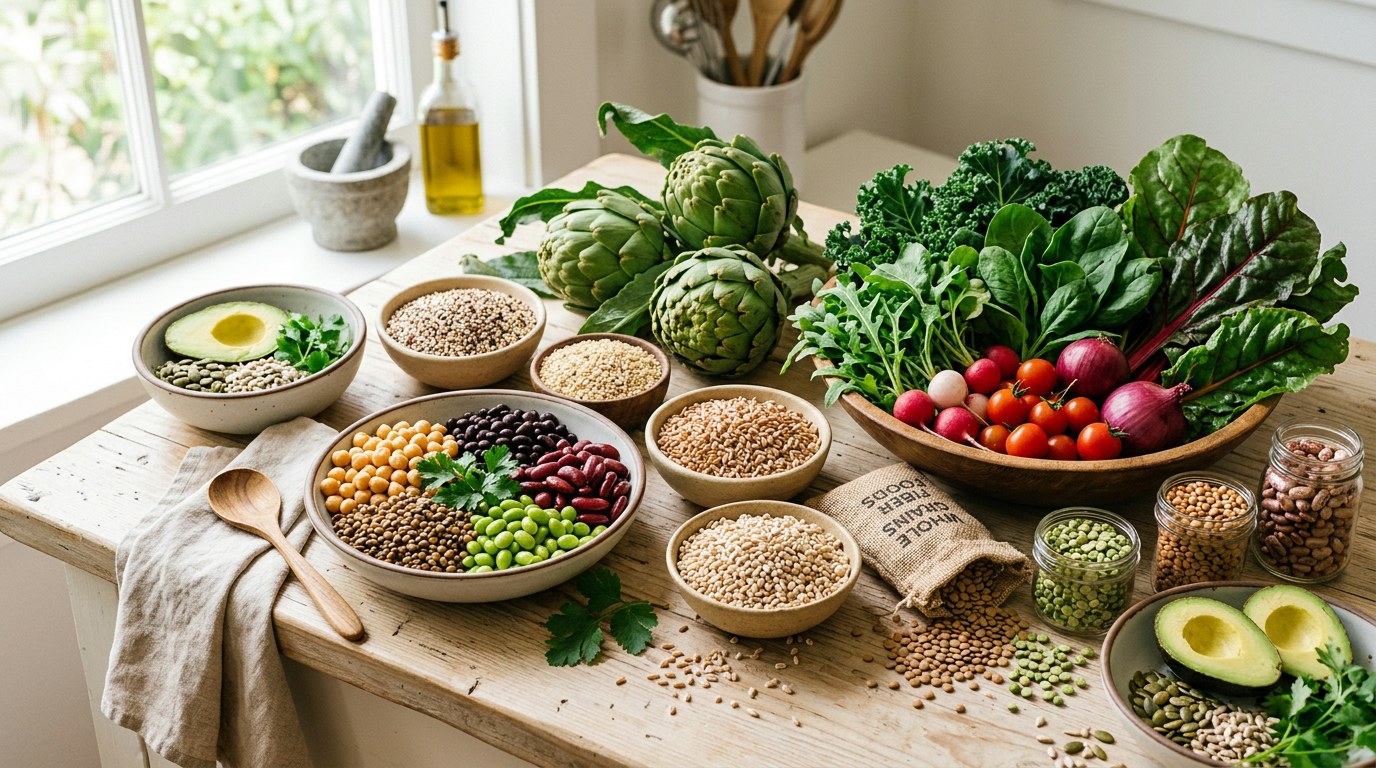
Soluble fiber dissolves in water, forming a gel-like substance in the digestive tract. It's the fiber found in oats, legumes (lentils, chickpeas, black beans), apples, pears, barley, and chicory root. From a metabolic perspective, soluble fiber is particularly interesting because it slows the absorption of glucose into the bloodstream, helping to moderate blood sugar spikes after meals. It also binds to cholesterol particles and supports their elimination, which has implications for cardiovascular health — particularly relevant as lipid profiles can shift after 45.
Insoluble fiber doesn't dissolve in water; instead, it moves through the digestive tract relatively intact, adding bulk to stool and promoting movement through the colon. You'll find it in whole wheat, brown rice, vegetables (especially skins and stems), nuts, and seeds. While soluble fiber gets more attention for blood sugar management, insoluble fiber supports digestive regularity and feeds certain populations of beneficial bacteria differently than soluble fiber does.
The research suggests that fiber diversity — getting both types, from varied sources — matters as much as total quantity. Yet the average American adult consumes only about 15 grams of fiber daily, compared to recommended targets of 25-38 grams depending on age and sex. That's a meaningful gap.
When you eat fiber, you're not directly digesting it. Instead, your gut bacteria ferment it, producing short-chain fatty acids — primarily butyrate, propionate, and acetate. These compounds do remarkable things: they support the integrity of the gut lining, fuel the cells that make up that lining, modulate immune function, and influence systemic inflammation. Butyrate in particular has been shown to affect cognitive function and mood stability, working partly through what researchers call the "gut-brain axis."
Midlife presents a specific challenge. As estrogen levels shift after 45, the composition of the microbiome changes. Some of the bacterial strains that thrive on estrogen decline, and if dietary fiber intake is low, the remaining microbial ecosystem becomes less diverse. Less diversity correlates with lower production of those protective short-chain fatty acids, which can affect everything from energy levels to immune resilience.
"Dietary fiber is fundamentally about feeding the trillion organisms living in your gut — and after 45, that ecosystem's diversity is both more fragile and more important to maintain."
The pathway is direct: more fiber, more bacterial fermentation, more short-chain fatty acid production, more stable gut barrier function, better systemic metabolic health. It's not complicated, but it does require intentionality about food choices.
One of the most well-documented benefits of soluble fiber is its effect on glucose metabolism. A single meal rich in soluble fiber (say, a bowl of oatmeal with berries and flaxseed) slows the rate at which glucose enters the bloodstream, resulting in a gentler blood sugar curve compared to the same calories without the fiber.
Why does this matter after 45? Insulin sensitivity can shift as women age, partly due to hormonal changes and partly due to lifestyle patterns. The pancreas has to work harder to manage the same glucose load when insulin sensitivity declines. Over time, repeated high blood sugar spikes and the excessive insulin response they trigger can contribute to metabolic stress. Soluble fiber reduces that stress by moderating the glucose spike in the first place.
This is one area where making deliberate food choices actually works. It's not about restriction or willpower; it's about choosing foods that make your metabolic system's job easier.
The standard recommendation is 25 grams per day for women over 50. For context, here's what that looks like in real food:
Distributed across three meals and a snack or two, 25 grams is entirely achievable without overhauling your diet. The key is consistency — aiming for that target most days, not perfection every single day.
A practical approach draws from the Mediterranean framework, which has research supporting its benefits for metabolic health in midlife.
Start with legumes as the anchor. A serving of lentils, chickpeas, or black beans (about half a cup cooked) provides 6-8 grams of fiber and substantial protein, making the meal more satiating. Legumes work in salads, soups, grain bowls, or even blended into dips.
Add a whole grain — oats, barley, farro, brown rice, or whole wheat. These aren't just fiber; they provide minerals and sustained energy. A quarter cup of dry oats yields about 8 grams of fiber; a cup of cooked brown rice yields about 3.5 grams.
Build in colorful vegetables, especially cruciferous ones (broccoli, cauliflower, Brussels sprouts) and leafy greens. Aim for at least two cups of non-starchy vegetables per meal if possible. The fiber compounds in vegetables also contain phytonutrients that support the microbiome in ways we're still discovering.
Include berries, apples, or pears for snacks or dessert. A half cup of raspberries contains 4 grams of fiber. A medium pear contains 6 grams.
Add small amounts of seeds and nuts — ground flaxseed, chia seeds, pumpkin seeds, almonds. These amplify fiber content without requiring large quantities, and they add texture and satiety to meals.
A concrete example: a breakfast of half a cup of cooked oats (4g fiber) + one medium apple sliced into it (4g) + one tablespoon ground flaxseed (2g) + a handful of almonds (3.5g) = about 13 grams of fiber in one meal, plus substantial protein and healthy fats. Lunch of a lentil and vegetable soup (8g) + whole grain bread (3g) = 11 grams. By dinner, you've hit your target before the evening meal.
If your current fiber intake is low, increasing it too rapidly can trigger bloating, gas, or digestive discomfort. The transition should be gradual — add a few grams per day over the course of a couple of weeks rather than jumping from 15 to 30 grams overnight.
Hydration matters more when fiber intake is higher. The insoluble fiber moving through your digestive tract works most effectively when there's adequate water in your system. As a practical rule, increase water intake alongside increased fiber intake.
Cooking methods preserve fiber more effectively than others. Steaming or roasting vegetables retains fiber better than prolonged boiling, which can leach some fiber compounds into the cooking water. If you do boil vegetables, the water itself becomes fiber-rich — save it for soups.
Prebiotic fiber supplements — chicory inulin, psyllium husk, partially hydrolyzed guar gum — can be useful as a complement to a food-based fiber strategy, particularly if whole food sources aren't accessible on certain days. They're not a replacement, though. Whole foods provide fiber alongside other compounds (polyphenols, minerals, vitamins) that work synergistically to support gut health. If supplements help you bridge a gap, they're worth considering. But the foundation should be food.
The microbiome supports metabolic wellness, which affects energy, mood, immune function, and long-term health outcomes. Dietary fiber is the most direct lever you have to influence that ecosystem. After 45, when microbiome diversity naturally shifts, intentionality about fiber intake becomes even more valuable.
This is why certain supplements — like the berberine-based patches reviewed in our Kind Patches article — can be a useful complement to a fiber-rich diet. Berberine has been shown to support both blood glucose metabolism and beneficial bacterial growth, working alongside the foundation that dietary fiber provides. But the foundation matters most.
The good news is that fiber is accessible, practical, and the research supporting it is robust. You're not betting on a trend or a novel supplement. You're working with one of the most fundamental nutritional strategies supported by decades of research.